Beginner's guide to identifying early LEGO bricks
Published 17.06.2026 by Fabian Berget Lindblad
Here is a guide for those of you unfamiliar with the early LEGO plastic bricks predating the familiar bricks with tubes. Hopefully after reading this you will be able to identify different types of bricks, colours, where they are from and when they were made. As well as what kinds of bricks to look out for when sorting through a collection of them.
Hollow and slotted bricks
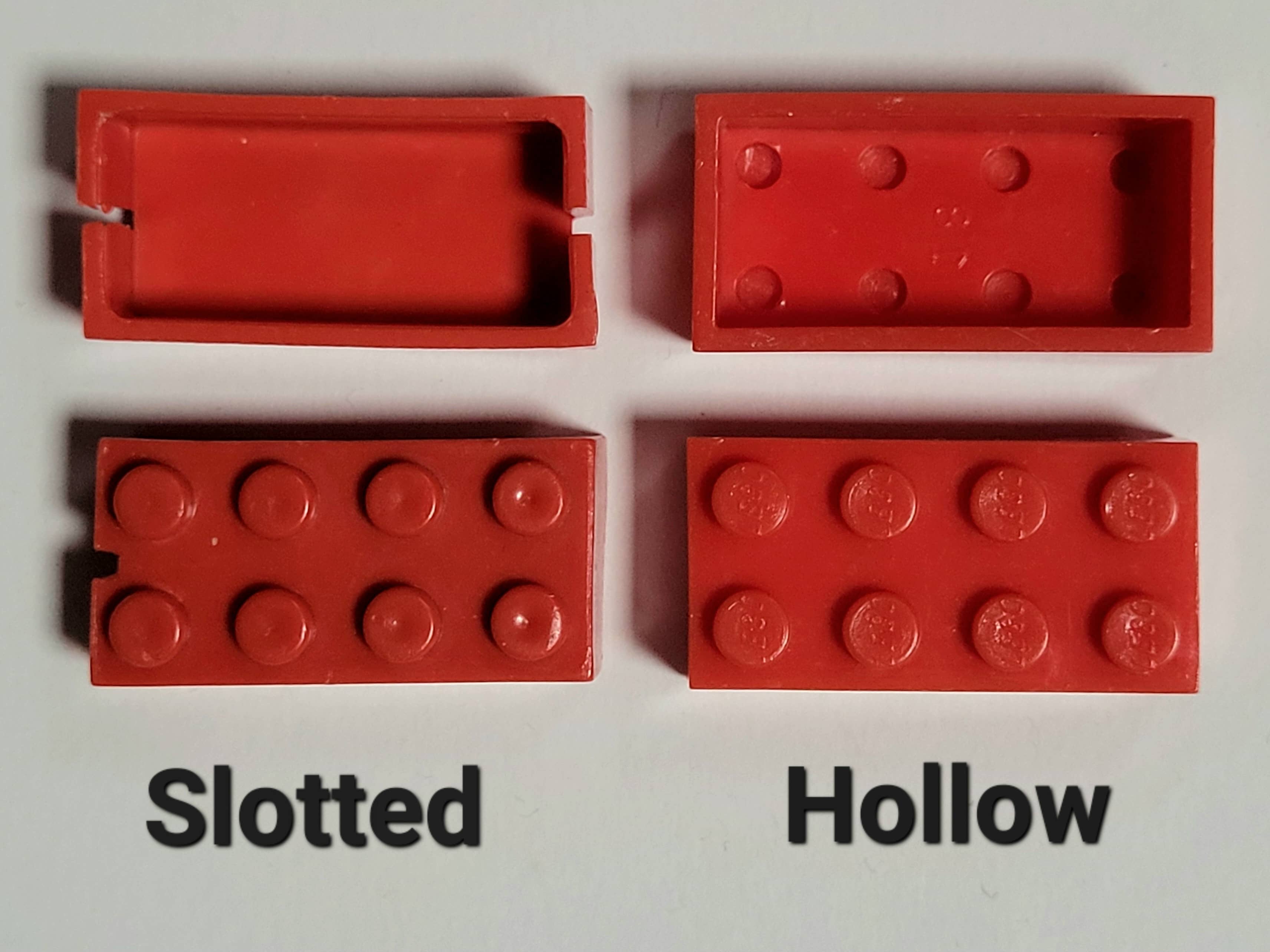
First off we need to be familiar with some basic terms. We call all bricks without tubes underneath "hollow bricks", simply because they are hollow on the underside. The first LEGO bricks had small slits/slots/notches on the sides of the bricks to fit windows and doors into. These are commonly referred to as "slotted bricks". They could also be called "hollow bricks", but it is easier to differentiate them with two different names. Slotted bricks were made as early as 1949 in Denmark and up until around 1957. Hollow bricks were made for a short period from 1956 until the introduction of the tube bricks in 1958.
Lots of variations
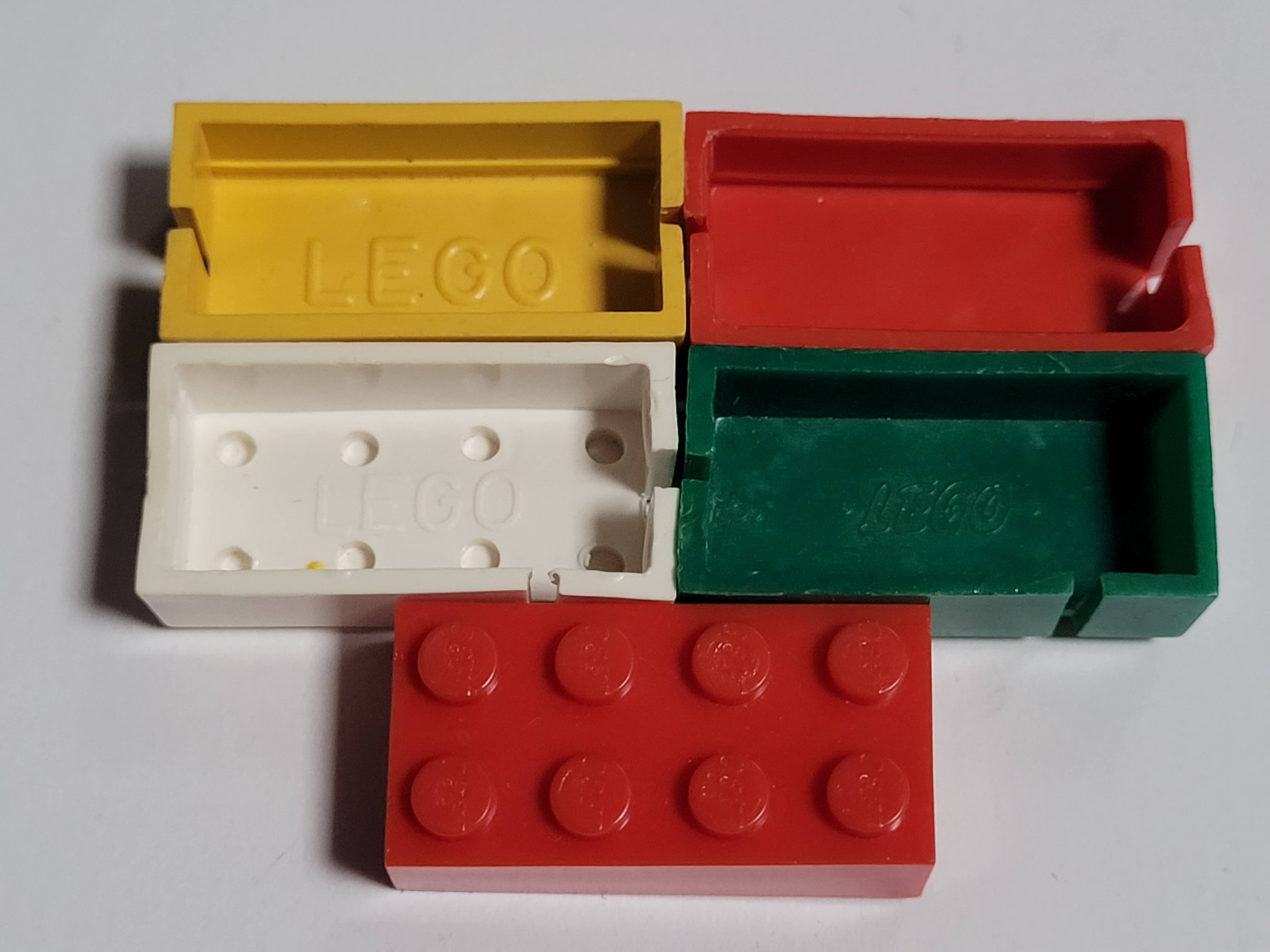
If you have been going through a collection of early LEGO slotted and hollow bricks you may have noticed lots of different types of bricks. Some have "LEGO" in big bold letters underneath, others have numbers on the underside, and some may not have any markings at all. These differences are very useful when trying to date the LEGO bricks.
The very first plastic bricks made by LEGO were called "Automatic Binding Bricks", and they were basically a copy from a plastic brick manufacturer in the UK called Kiddicraft. These bricks were first made in 1949 and had no markings on them at all. LEGO was not the only one to make their own copies of these plastic bricks, so there are lots of other similar brands and bricks out there. For example "Byg Selv" - another Danish plastic brick brand without any markings. For the untrained eye it can be difficult to spot the difference between these bricks and LEGO. So we highly recommend asking someone with experience to help identify them. If you are on Facebook you can check out the LEGO group Pre-1975 for help with identifying bricks.
In 1952 after the Automatic Binding Bricks, LEGO rebranded the bricks to "LEGO Mursten" and added "LEGO" in bold letters underneath the bricks. From this point on all the plastic bricks made by LEGO were marked with "LEGO" either underneath the bricks or on the studs, sometimes even on both at once! So there should be no problem for you to tell if these bricks are LEGO or not.
Different countries different bricks
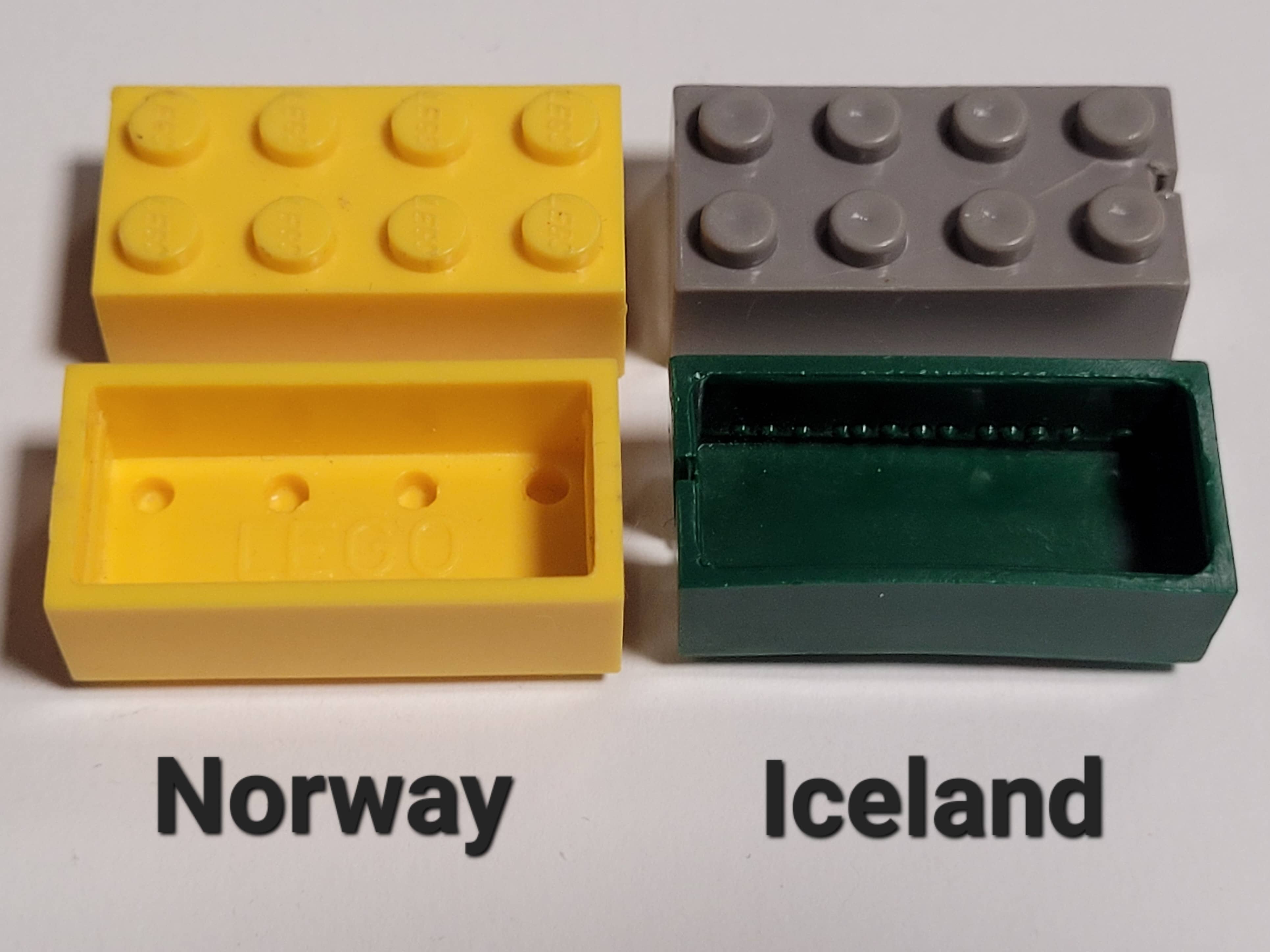
Since the early 1950s LEGO has not just been made in Denmark. In 1950 a company in Sweden rented tools from LEGO to make bricks there, in 1953 a licensed production was set up in Norway, and in 1955 in Iceland as well. This lead to quite a bit of local variation in brick types and colours used, which can be a good identifier when trying to figure out where they are from.
Let us start with the easiest way to spot the difference between bricks from various countries. The brick types. Norway was the only country to make slotted and hollow bricks with "LEGO" present on both the studs and underneath. In Iceland the Automatic Binding Bricks without any markings on them for some reason had small bubbles at the edges inside the bricks. Maybe a weird detail, but an easy way to tell them apart.
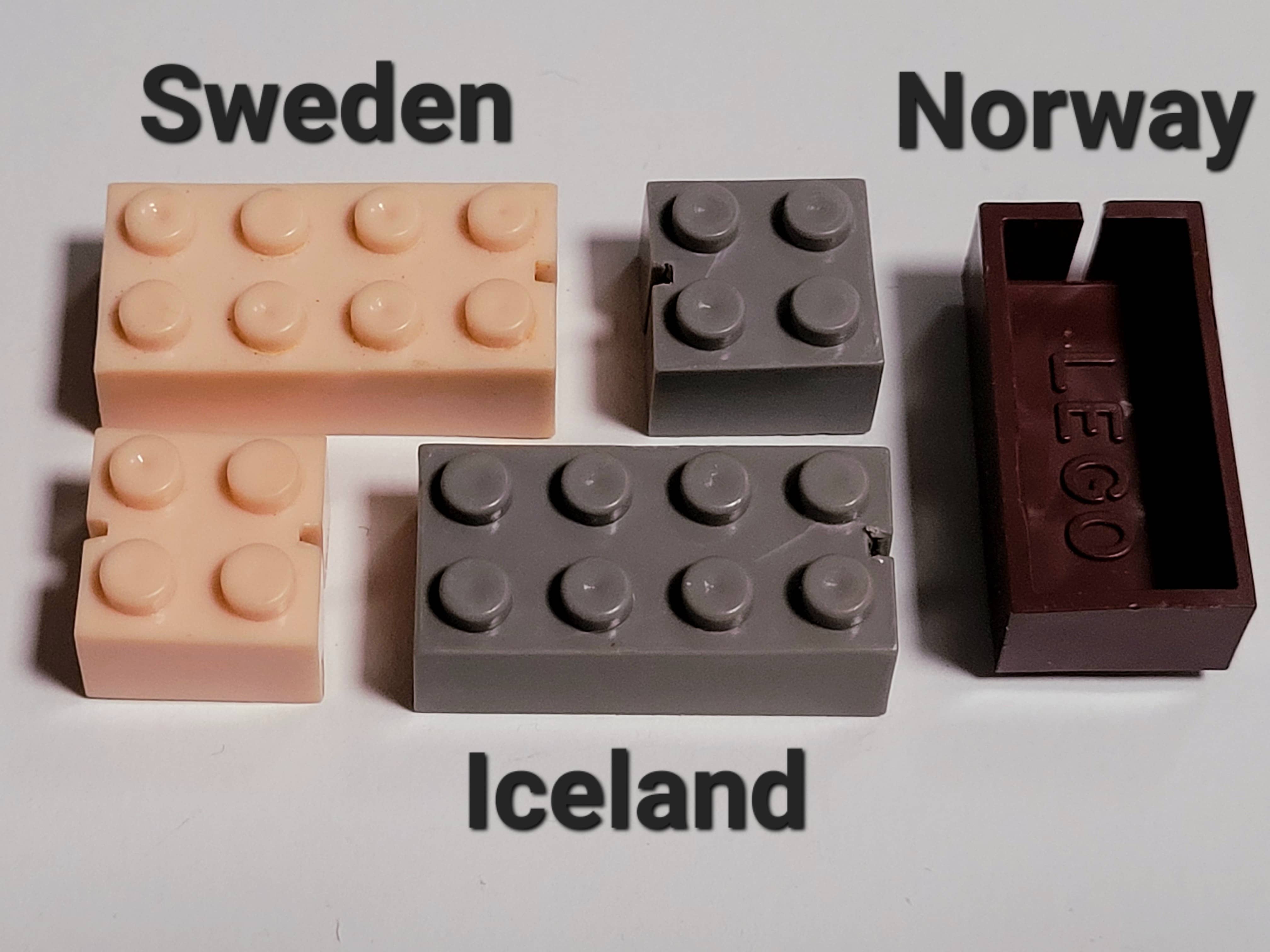
Next up we have colour. Sometimes a very easy way to tell the difference, but unfortunately it can sometimes be a little confusing as well as some colours are very similar. So we will just be looking at the easiest examples here. First off, Norway was the only country to make brown bricks. So if you find a brown brick, no matter the brick type, then it is from Norway. Iceland was the only country to make gray slotted bricks, and Sweden was the only one to make pink bricks. As simple as that!
If you want to go much more in detail, learn about all the brick types and colour variations. Then we have very detailed guides you can find at the bottom of the article.
What to look out for
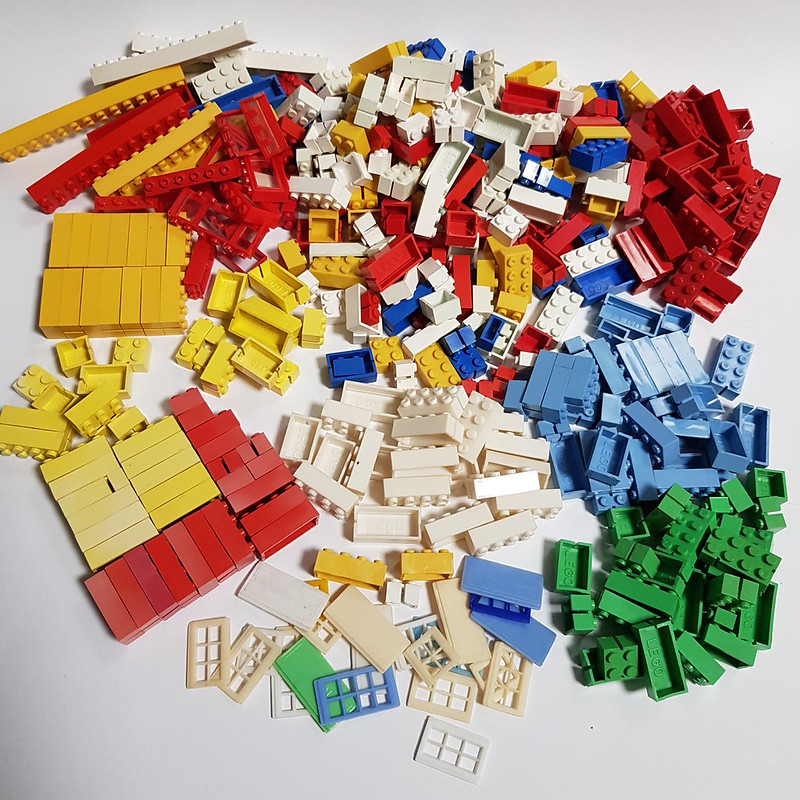
Going through a big collection of LEGO can be overwhelming, so here are some things to look out for when sorting through old bricks.
1. Sort the bricks in three: slotted bricks, hollow bricks and newer tube bricks. It is usually not worth your time sorting the slotted bricks into all the different brick types, so just keep them in one pile.
2. Look out for special colours. As mentioned earlier some colours are unique for certain countries and they can be more valuable. Here are some examples. Brown slotted bricks from Norway. Green hollow bricks (the bricks without slots) from Denmark. Marbled bricks which are bricks showing a mix of different colours.
3. The country your bricks are from. Usually the value of the bricks are very much based on where your bricks are from. Icelandic bricks are the hardest to find, Swedish second, Norwegian third and Danish fourth. This of course depends on if the bricks are of a special type and/or colour from that country. Basic bricks and colours from any country are worth roughly the same.
Summing up
Now you should be able to sort through and identify most of the bricks you have. If you found it interesting and would like to learn more, then we have lots of detailed information here on our website. You can check out some of the links below:
Thanks for reading!
Last edited 17.06.2026