How it started
The story of how LEGO crossed the ocean over to Iceland starts as early as 1955. Back then Iceland was under tight import regulations, similar to the regulations Norway followed at the time. These regulations made import of toys and other goods difficult. This was done to help the economy of the country and also keep and create new jobs for the Icelanders.
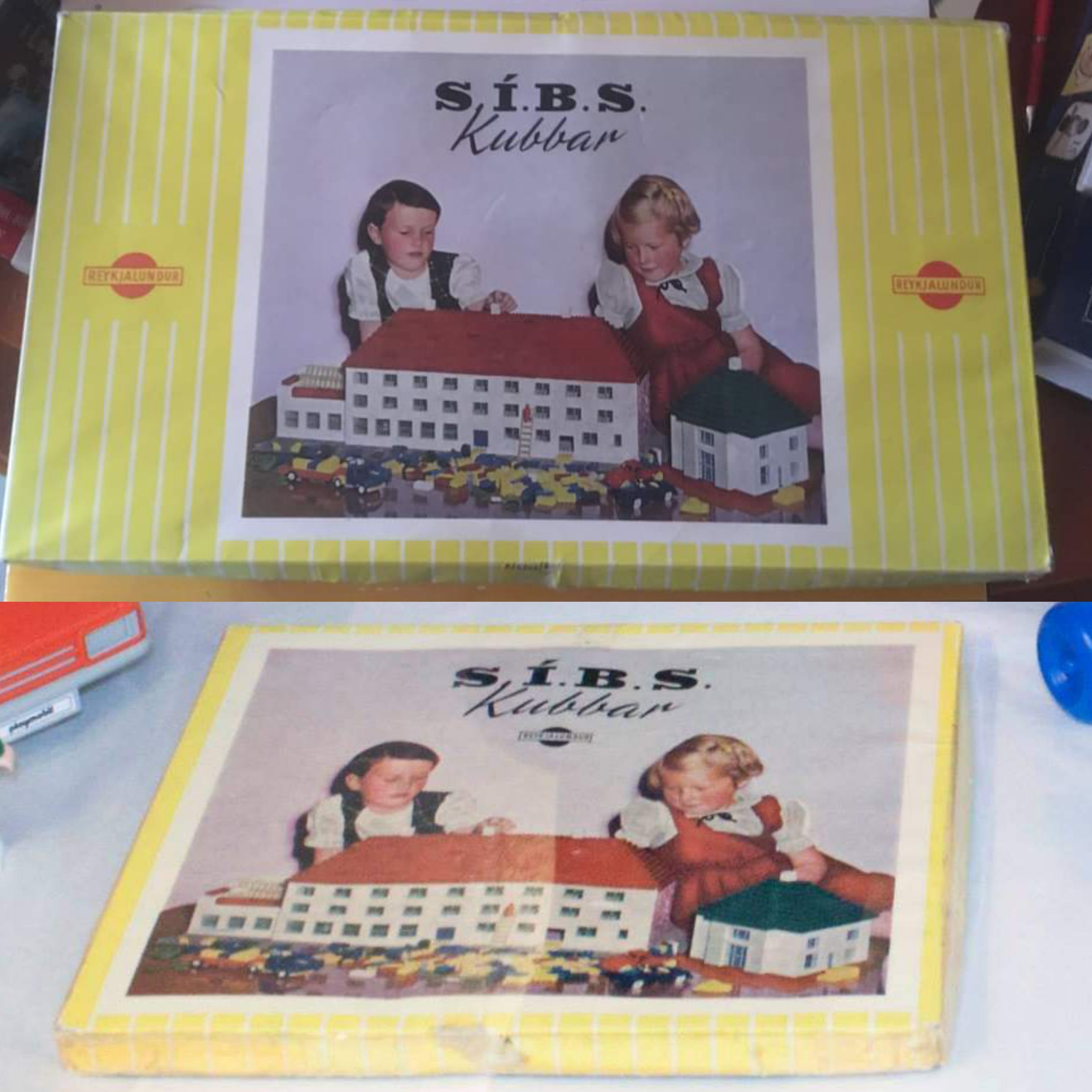
SIBS Kubbar LEGO sets. Pictures from Reykjalundur museum.
After LEGO sales had begun in Norway (1953) and Sweden (1955), Iceland was the third country to give LEGO a go. A license agreement was made with SIBS (the Association of Tuberculosis and Thoracic patients), which may sound unusual. However, SIBS had established a work center for patients who were on the road to recovery called Reykjalundur. They had started plastic production back in 1953 and made various products including toys. By 1955 they were the biggest producer of toys in Iceland!
Part of the agreement with LEGO was to rent moulds for production of various LEGO toys. Due to the import restrictions the toys were not allowed to be marketed by a foreign brand. So during the 1950's all the packaging for the LEGO toys were rebranded to Reykjalundur. However the toys/moulds themselves were not altered and still had the LEGO name on them. For instance the "LEGO Mursten" sets were renamed to "SIBS Kubbar" (SIBS Bricks) and the packaging changed.
By 1960 most of the import restrictions had been lifted and LEGO could now be used as part of the packaging. Reykjalundur continues making and selling LEGO bricks on behalf of LEGO in Denmark all the way until 1977. At that point Reykjalundur was not able to follow the expanding LEGO assortment, and LEGO production in Iceland was stopped. Still Reykjalundur works as the LEGO distributor to this day.
Read more about Reykjalundur on their website www.reykjalundur.is and about the LEGO production on LEGO's website: www.lego.com.