The beginning
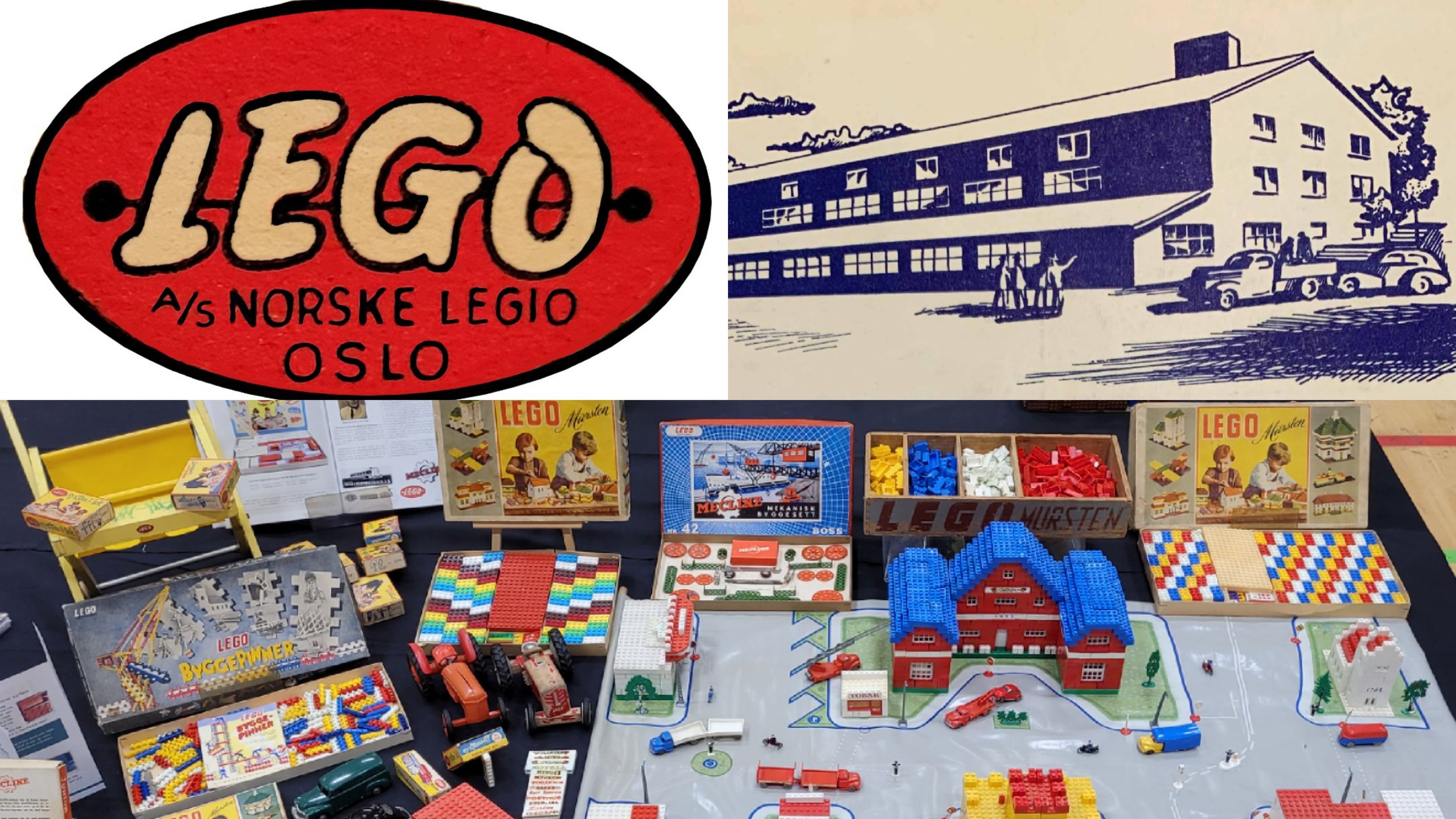
To understand how it all started, and how the choice landed on Norway as the first country outside Denmark to sell and produce LEGO, we need to go far back in time.
Ole Kirk Christiansen, the founder of LEGO, was a carpenter by trade. While mainly doing work in Denmark he also traveled abroad to work in Germany, as well as Norway. While in Norway he met a young man named Svein Strømberg who was a carpenter apprentice at that time. It is unknown how well they got to know each other, but we know they at least met. After his time in Norway Ole returned to Denmark, there he eventually established the LEGO company and started making wooden toys. A little later, in 1941, a now older Svein Strømberg had established his own company "Strømbergs AS" making household and office supplies out of metal.
After the second world war the national finances in Norway were in a complete unbalance. To combat this the currency restriction which were in place before the war were strengthened to prevent funds from leaving the country. The currency restrictions prevented the export of currency to import luxury articles amongst other things. Toys fell into this "luxury articles" category as they were not considered a necessity. The solution to keep a variety of products and toys available while keeping the funds in Norway was licensed productions.
In 1946, Strømbergs took the leap into the plastic industry and started making plastic products with a new brand name, "Sveinco". The production mainly consisted of household items, but they laso made their first plastic toy the same year named "Skyrunner". 1946 was a year earlier than LEGO who started making their first plastic toys and products in 1947. Heading over to 1950, Strømbergs had grown their plastic production significantly, and now had a big catalogue of plastic products that they made. Likely more than LEGO who was still in the process of expanding their plastic production and product catalogue. In 1951 LEGO released their plastic Ferguson tractor which turned out to be a big success. Already in 1952 the tractor has become the main driving force for LEGO's plastic sales to surpass their wooden sales for the first time.
The increasing interest for plastic products makes LEGO eager to expand and see what they have to offer. Already in 1951 they are talking about starting their first sales across the border, and see if the success can continue there. Ole Kirk Christiansen ends up in contact with Svein Strømberg in Norway to discuss this further, and in 1952 the first test production is started. If the choice landed on Svein because him and Ole had kept in touch since they first met, or if they regained contact when they both started in the plastic industry is unknown. However it is safe to assume them already having a connection had an impact on the decision. Ole's son Godtfred was closer to age to Svein, and we know those two ended up having a very close friendship lasting the rest of their lives.
1953 - The adventure starts
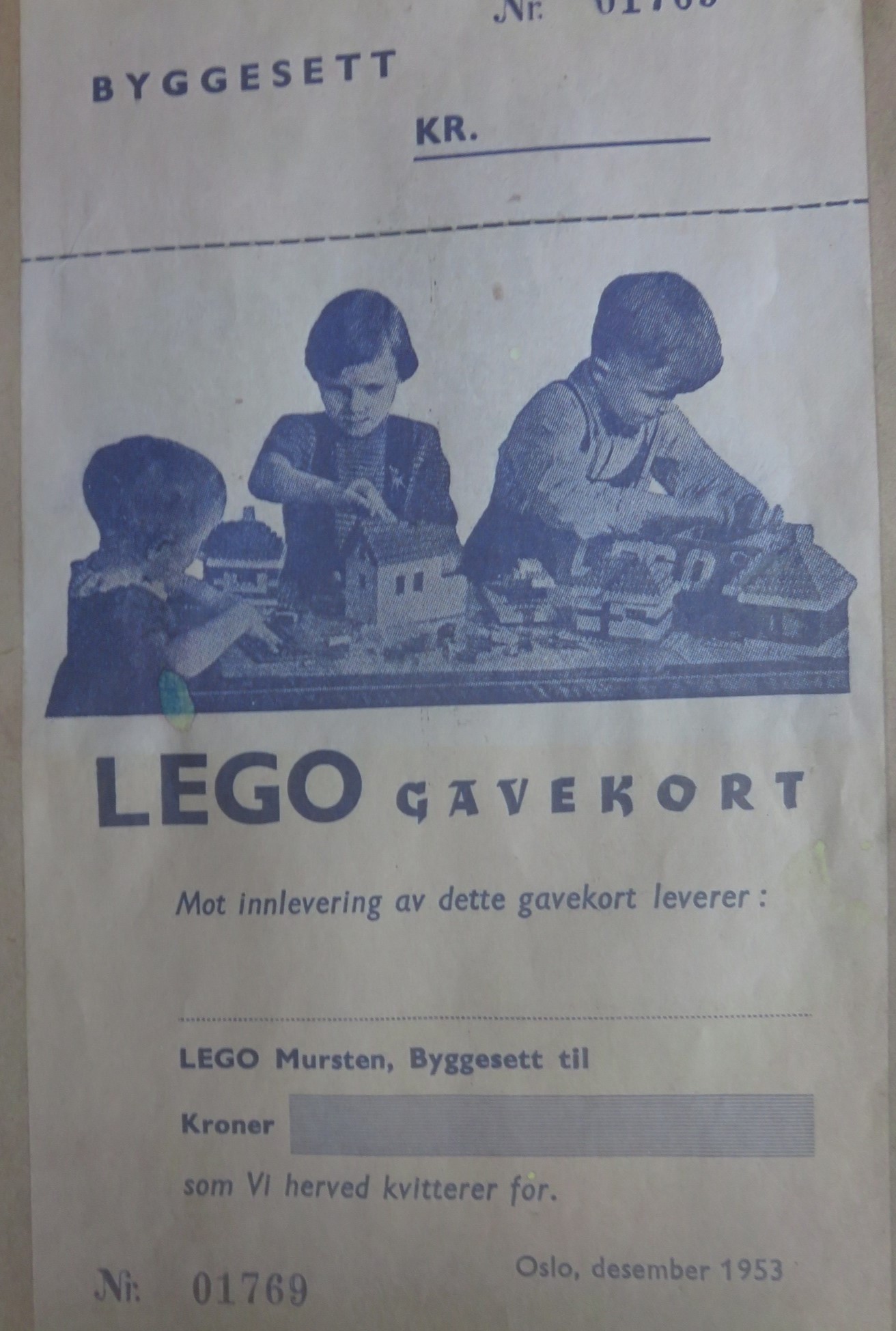
The gift card issued to retailers.
In September 1953 all agreements had been made, plastic molds for the toys were prepared, and production was set to begin. The first production run consisted of LEGO Mursten / Automatic Binding bricks and LEGO Chevrolets. From what we can see LEGO Mursten were really popular in Norway right from the start. Which of course was great for the company as long as they could keep up with it...
The big interest for LEGO Mursten ended up causing production problems for Strømbergs, they were simply not able to keep up with the demand. So when it was time for the big Christmas sale they were all out of LEGO sets! Thanks to quick thinking, gift cards were distributed to stores that could later be exchanged for LEGO when they were back in stock. It would of course not be as exciting for a child to recieve a gift card as it would be to recieve an actual LEGO set, but at least it was something. We can only imagine how hectic these times would have been for Svein Strømberg and his employees. It is likely those plastic bricks kept being pumped out of the factory all through Christmas and New Year. Interestingly enough the LEGO bricks from this time came in a wide variety of colours and plastic types. Maybe this was because they literally used everything they had at their disposal to keep up with the demand?
Help from abroad
Scaling up production is not done in the blink of an eye. So while Strømbergs were working on it, LEGO in Denmark stepped in to help. They sent boxes and parts to ease the demand. Soon the backlog was dealt with, but the problems did not stop there. Strømbergs started receiving complaints about their bricks and plates. They had started bending and did no longer fit together, which kind of defeats the whole purpose of LEGO... Coming up with a solution for this right away was not easy. So they started holding back bricks for 2-4 weeks, keeping an eye on them and removing any that bent during this time. This was to ensure that the bricks coming out to customers were of the best quality. For the thin baseplates the solutions was to nail them to thin wooden plates. This way the plates would be more sturdy and also hold their shape better.
The "LEGO" name was already taken
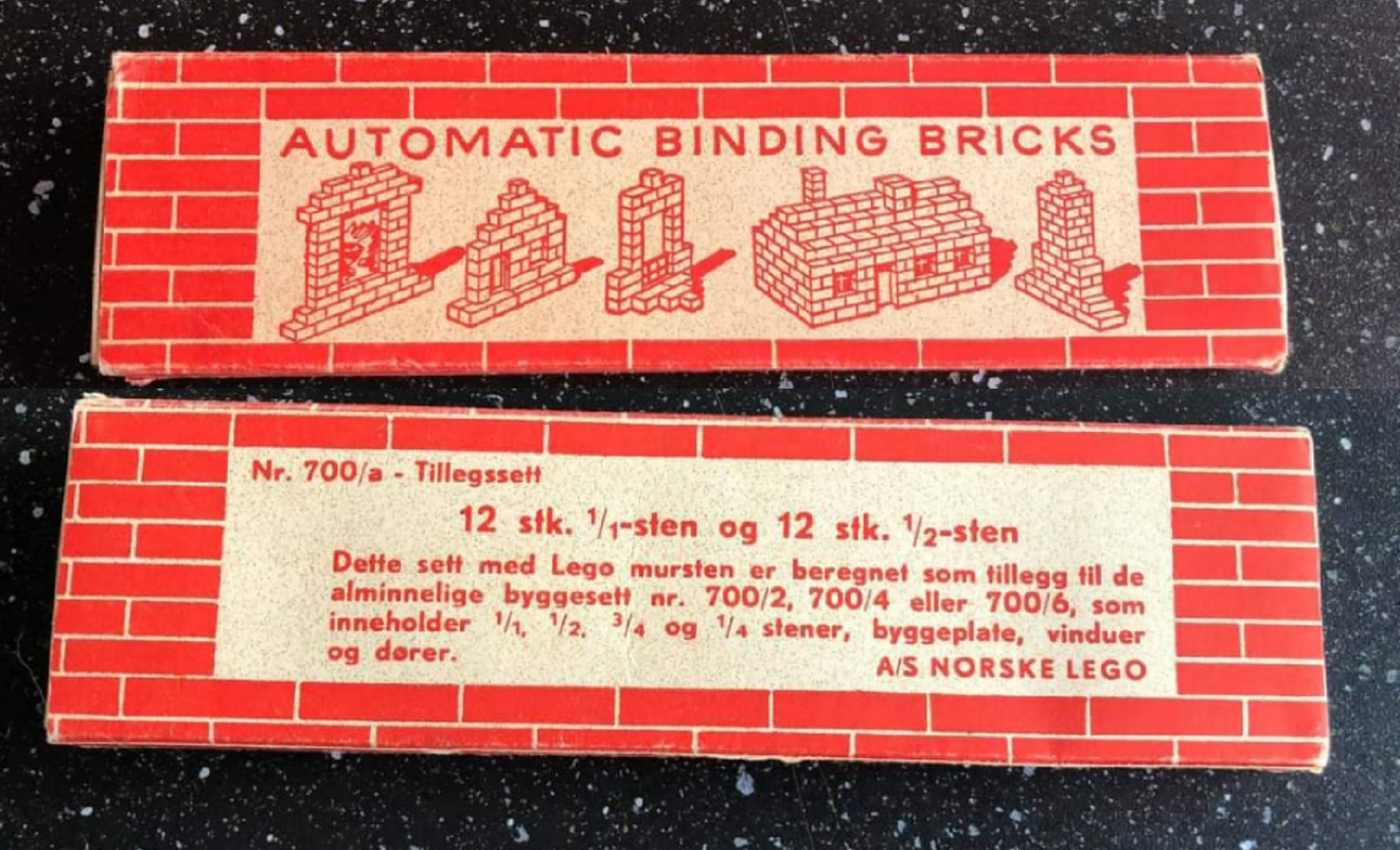
One of the first Norwegian LEGO sets from 1953. Notice the Norske LEGO name. Picture from sold listing.
Yes you read that right. Strømbergs wanted to use the name "A.S. Norske LEGO" (Translated to "A.S Norwegian LEGO") for their toy department/distribution, and so they did. However, not for long. It turned out another company had already taken the LEGO name a few years earlier, and they filed a complaint to Strømbergs. The man behind the complaint was "Leopold Goldman", he had simply taken the two first letters of his first and last name to create the company name. Strømbergs attempted to come to an agreement to buy the name, but no luck. So when it was brought up to court the only solution was a name change, but they came away with only a small one, changing it to "A.S. Norske LEGIO". LEGIO, altough being close to LEGO, could also be translated to "multitude" or "a big number" in Latin. This ended up being a great choice as they eventually made a wide variety of toys, not just LEGO.
For the continuation of the article we are going to use the name "Norske LEGIO" when referencing the company.
1954 - The year that followed
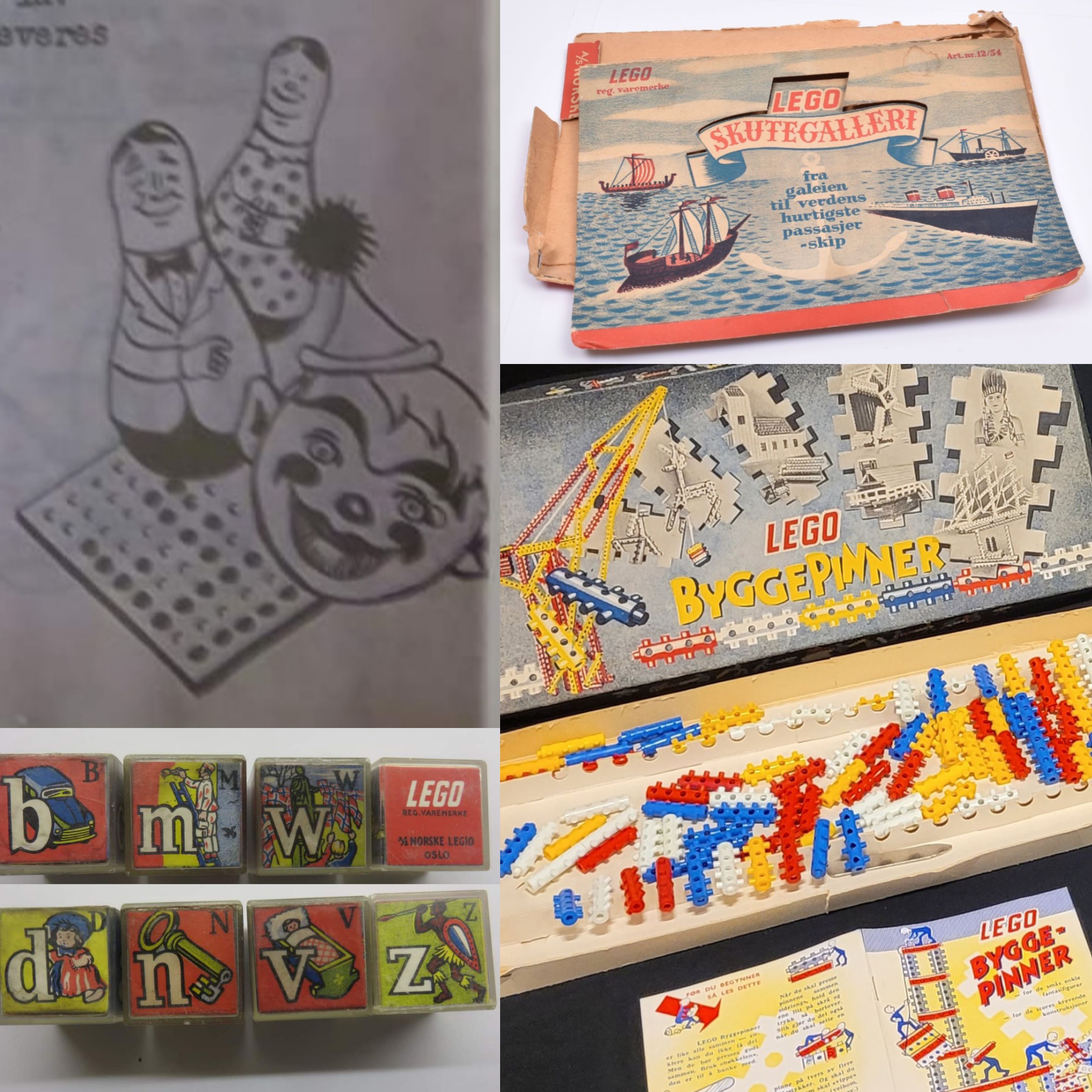
Rudolf, Kulemosaikk, Den magiske familie, Skutegalleri, Bokstavklosser and Byggepinner.
After a few hectic months and things calming down a bit, Norske LEGIO released some new LEGO toys, "Skutegalleri", "Byggepinner", "Bokstavklosser" and more. They also received new plastic molds for the bricks, properly marked "LEGO" underneath and in new 1x2 and 2x3 sizes. Seeing that the "Skutegalleri" and "Byggepinner" were patented and designed in Denmark, but only released in Norway, it seems like Norway was used as a kind of "testing market". Maybe they wanted to see how new toys performed on the Norwegian market first, and if underperforming toys in Denmark could perform better in Norway.
Around the middle of 1954 we saw lots of new introductions. Thicker baseplates, better quality bicks and in more sizes, even more toys and also new boxes for the sets. The boxes they had been using were quite simple, but rather easy to produce. Apparently the LEGO Mursten boxes they had released in Denmark in 1953 were an issue to have made in time in Norway. So different boxes had been used while the newer ones were prepared for production. As mentioned earlier some boxes were sent from Denmark to Norway to help with the production problems around Christmas. Which is why some early Norwegian bricks may be found with the new box type.
1955 - Making a system of play
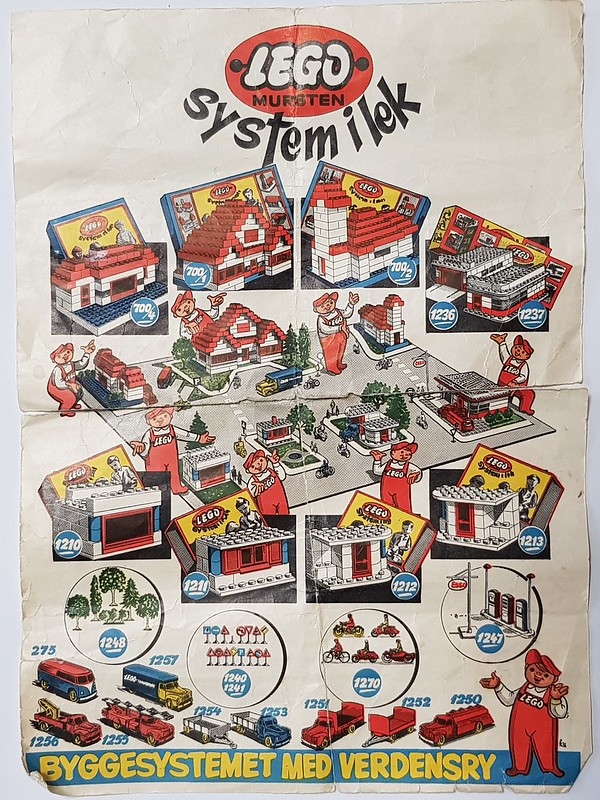
At first 1955 seems like a quiet year after the many changes and expansions throughout 1954. However behind the scenes the plans are big, on top of the production already being bigger than before. Together with LEGO in Denmark the plan is to turn "LEGO Mursten" from simple plastic bricks to a full "system". They design small cars, traffic signs, bricks with text, trees, road plates and much more, so that you could build a complete LEGO town. It all fitting in the same "system" and scale.
To give everyone a little taste of what is coming, a small Bedford ESSO tanker truck is released in early 1955. It has set number 999 and is given away for free to customers at ESSO stations around the country. There is no mention of the system on the box, but the little truck sparks interest as it is in a different scale from any of the other LEGO toys. So when the system eventually releases children across the country wants to get their hand on sets and parts fitting with their little ESSO truck.
The LEGO System release consisted of 15 small sets with various parts and small buildings, as well as 6 trucks, 2 of which with seperate trailers. There was also a thin plastic sheet rolled onto a stick that you could buy. When rolled out it had roads and building areas printed on it. The LEGO System ended up being a big success in both countries.
The northern countries working together
After a bit of a rough start in 1953, the production in Norway was for the most part going smoothly now. At the same time LEGO in Denmark looked to the neighbouring countries Sweden and Iceland as the next countries to recieve the joy of LEGO. Supplying them with all the LEGO needed would however not be easy. In Denmark they had full plans to next year expand into the big toy market of Germany. So once again they looked to Norway, and Norske LEGIO took on the task, and supplied Sweden with LEGO for the first year. Tools had to be shipped from both Denmark and Norway to Iceland to set up an own production there, as they were under similar import restrictions as Norway. At least that helped not having to make LEGO for all of Iceland as well..
Mecline - LEGO in metal?
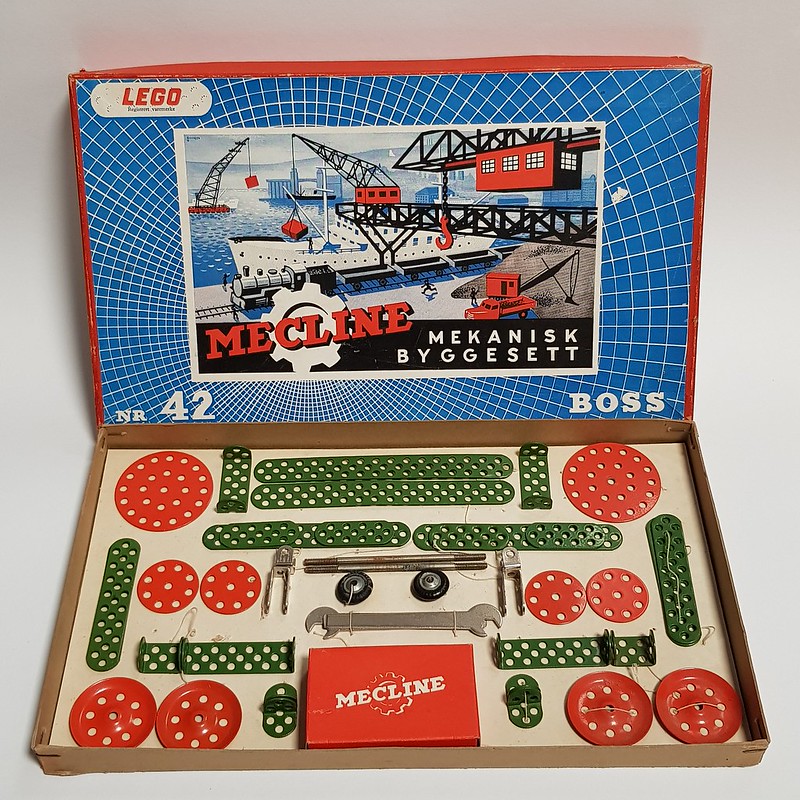
While we are in 1955 we must also mention Mecline. Norske LEGIO and Svein Strømberg did not only make toys from LEGO in Denmark. They also had license agreements with Tekno in Denmark and eventually Bambola. Starting in 1955 Norske LEGIO made a metal building system, similar to Meccano as some of you may be familiar with, that they named Mecline. This was a toy made by Tekno that they rebranded for the Norwegian market. To help the sales of this new toy "LEGO registered trademark" was added to the Mecline building system boxes. The building instructions also included pictures with ideas of how you could use Mecline together with LEGO bricks and other LEGO toys. So altough it is not really a LEGO toy, it is considered to be a part of the LEGO line up of toys in Norway. Later in 1957 the Tekno license was expanded to include their small toy cars in metal, still using the Mecline name. There was even made a VW van with LEGO and Mecline decals on each side.
1956-57 - Expanding the toy production
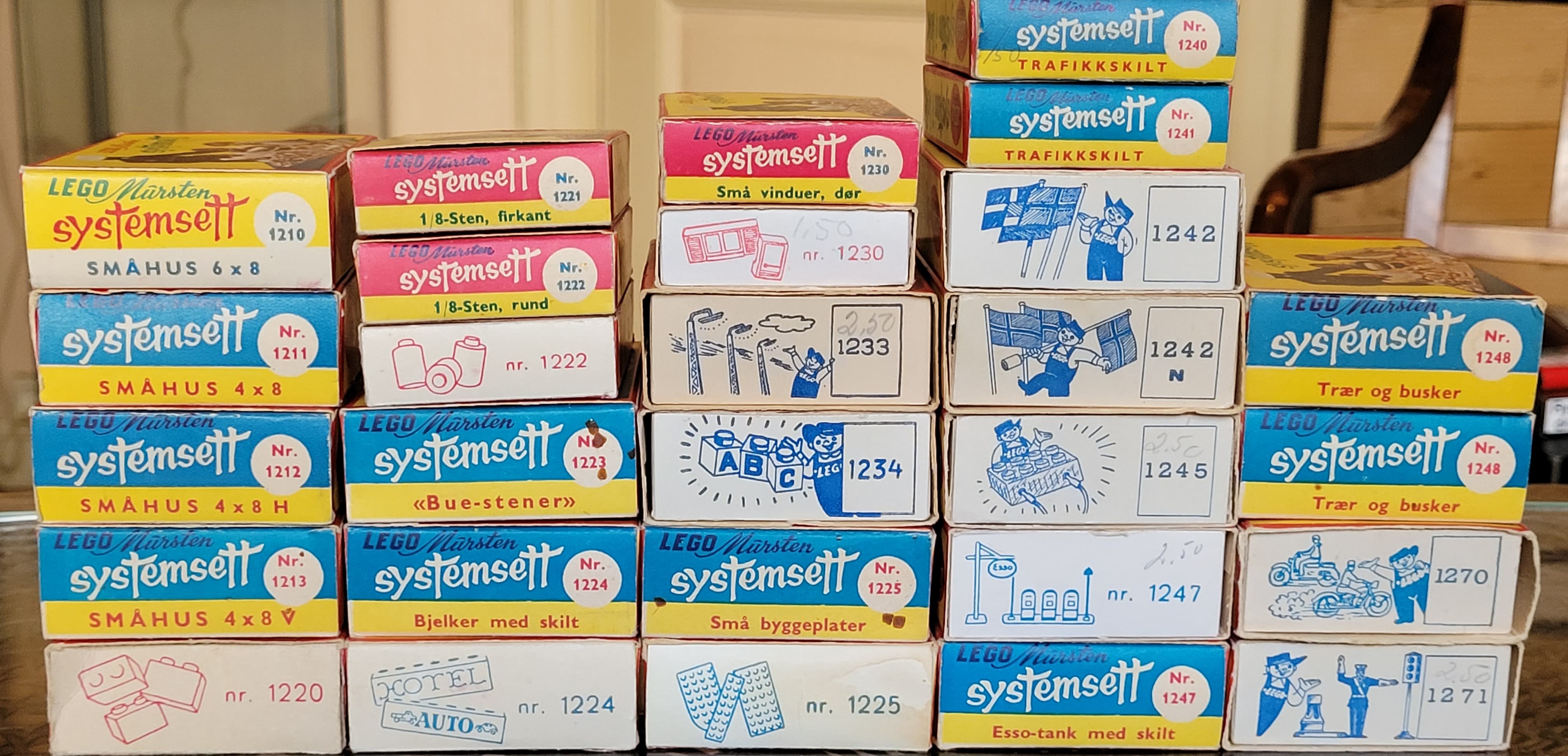
After yet another hectic year in 1955 it seems like things settled down a little in 1956. There are few new releases, but few does not mean less important. This is the year the very first big LEGO system set is released, the 1310 ESSO station together with the little brother 1309 ESSO garage. LEGO in Denmark is also looking to add the Netherlands to their list of LEGO countries. So as they have done before they look to Norway, and Norske LEGIO swings around to support the Dutch market with sets and parts, giving it a boost starting in 1957.
Moving into 1957 the final expansion of the LEGO system is ready. Four more large building sets, two of which being the 1308 Firestation and 1309 Church. As well as 6 small system sets; policemen and light bricks to mention some. Finally the plastic Ferguson tractor which was a big success for LEGO in Denmark reaches the Norwegian market. Together with various tractor equipment, some wooden toys are also made, inlcuding a doll chair and a big Chevrolet car. These wooden toys were not made by Norske LEGIO, but rather ordered from a seperate carpentry company. It is still not known what company it was.
A long awaited addition to the LEGO System "car park" also came in 1957, a small VW beetle. Finally the residents of your little LEGO town had a personal car they could drive to work with and not just big trucks. Behind the scenes the plan is to expand the car park even more. A 1957 model of an Opel Kapitan is being designed with two more being planned, one being a Vauxhall Victor and the other a Simca Arronde.
1958 - Nearing the end
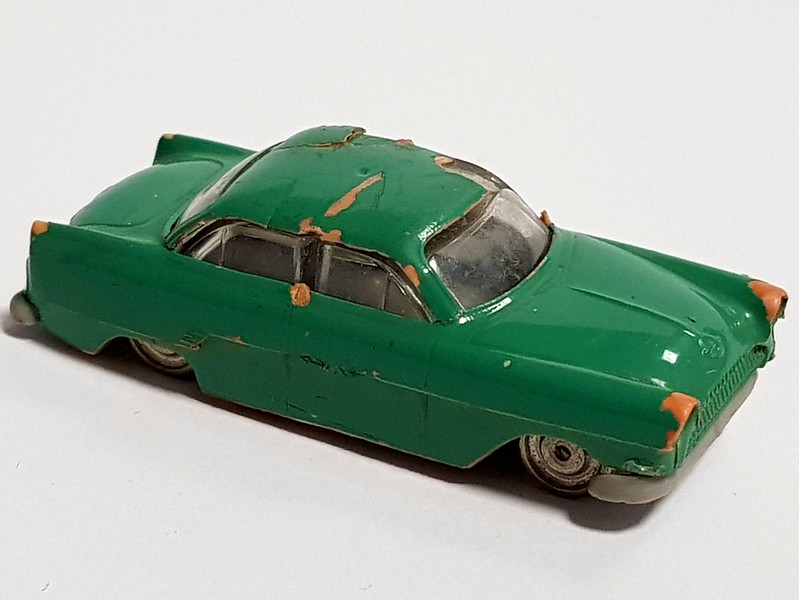
At the start of 1958 the Opel Kapitan becomes available for stores to order. They recive them, begin selling them, but then complaints start to arrive. The car is way too fragile and can not withstand children's play. Especially the window frames / roof support and the wheel axle holders are the issue. As pressure is applied to the top of the car, the roof caves in, and the wheel axles break out of position. The cars end up being pulled from the market and the remaining ones are given out to factory employees. Because of this the plans for the two other cars were also scrapped, and the only Norwegian designed system car ended up being the Opel Kapitan. Today these cars are very seldom seen and very collectable.
Throughout 1958 Norway goes through a "standardization", meaning the boxes are made identical to all other countries and set numbers are changed to 3 digit numbers. No more special Norwegian colours, bricks, sets and box types. This is in preparation for a world changing reveal from a LEGO, a new type of brick that is going to revolutionize the toy market. We are of course talking about "The LEGO Brick" with the tubes inside that we all know and love today. At the same time this kind of marks an end to the Norwegian LEGO story as well. What once was an exciting new Norwegian twist on LEGO sets and parts has to bow under for the Danish LEGO empire aiming to take over the world.
1959 to 1962 - The end of Norwegian LEGO production
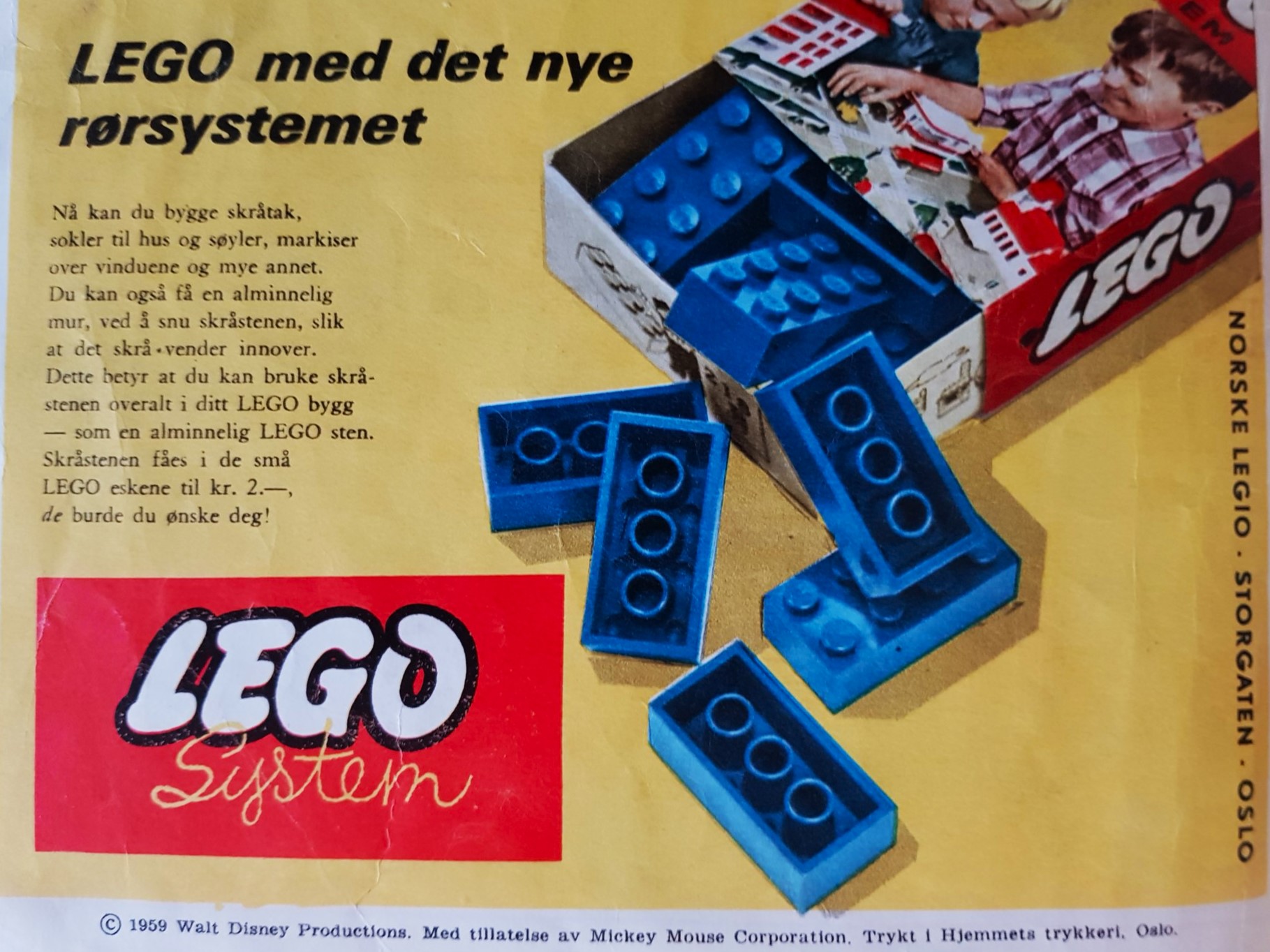
1959 is a sad year for Norwegian LEGO. The agreement between LEGO in Denmark and Norske LEGIO for the licensed production is revoked. No more LEGO will be produced on Norwegian soil from this point out. However, the tie between Norske LEGIO and LEGO in Denmark is not entirely cut. Svein Strømberg is made the general agent for LEGO in Norway, and Norske LEGIO becomes the distributor for Danish LEGO sets to the Norwegian market.
Svein Strømberg and Norske LEGIO continues as the distributor until LEGO themselves establishes their own sales office in Norway 1962. This marks the definite end to the amazing Norwegian LEGO adventure. In 7 short years from 1953 to 1959, Svein Strømberg and Norske LEGIO contributed significantly to the expansion and development of LEGO. They left a lasting mark on the LEGO history and is the reason Norwegian LEGO is so highly regarded and collectable today.
The Strømberg family's continuous involvment with LEGO and the Christansen family
Altough Svein Strømberg's and Norske LEGIO's involvment with LEGO production and distribution was over, the Strømberg family and the Christansen (LEGO) family still kept in touch and helped each other out. They went on some vacations together and always sent post cards to catch up on Birthdays and Christmas. So altough the cut off looks quite drastic on paper, the relations were still going strong. The friendship continued all the way until Svein Strømberg's death in 1994. At the funeral, Godtfred Kirk Christiansen (Ole's son) gave a speech thanking Svein for his involvment with LEGO. There it was also mentioned that Svein was a central part in finding Cycolac (ABS plastic) which replaced the warping Cellulose Acetate (CA plastic) in 1963, likely saving LEGO from losing their dominant position in the toy industry. The year after Godtfred also sadly passed away, and the long lasting friendship between the two families with it. The reason could be the new generation not having the same close relation.
Svein's sons were also helping out with the LEGO production and their involvment with LEGO did not end in 1959-1962 either. One of his sons called Svein Petter went to work for the plastic company Bayer who supplied LEGO with plastic. The other son called Per Sigmund went to the United Kingdom where he helped setting up the LEGO company and factory in Wrexham in the early 60's.
Thanks for reading!
A big thank you to Arild Anderson who is the pioneer when it comes to collecting and reasearching the early Norwegian LEGO history. We would not have had this long and detailed story without him. As well as Gary Istok who has helped out with making sense of all the different sets, boxes and timeline. It has been no easy feat!
Want to read more?
Here you can read about all the Norwegian LEGO sets and items in more detail.