1:87 Opel Kapitan - The holy grail of LEGO model car collecting
Published 01.06.2026 by Fabian Berget Lindblad
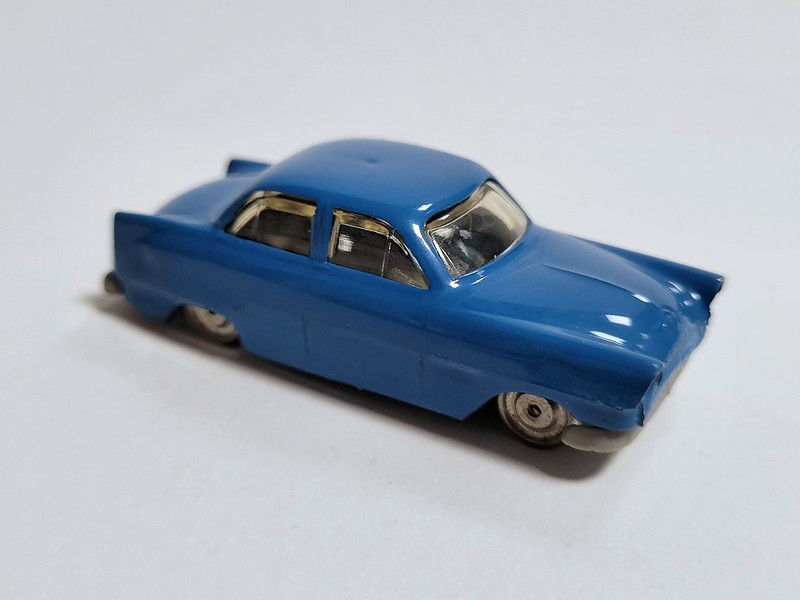
For decades the Opel Kapitan has been a staple for collectors of early LEGO toys and history. It has been infamous for its rarity, collectability and mystery. Where did this little car model come from, why is it so rare, and how come we know so little about it?
The LEGO System
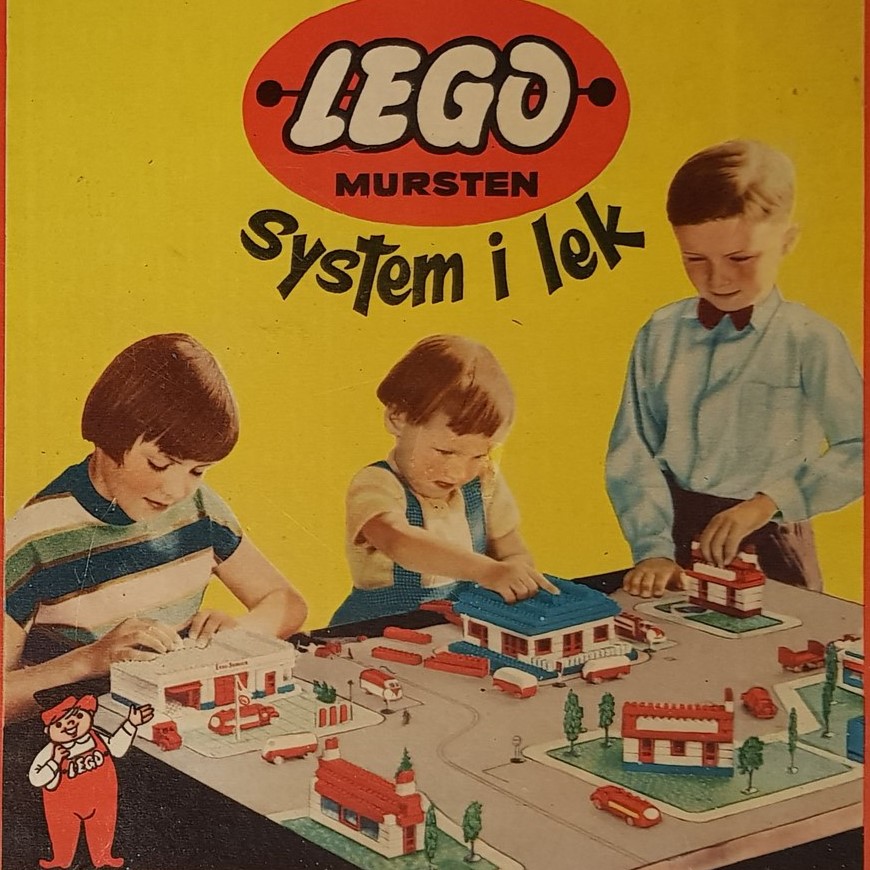
In 1955 LEGO releases a series of new sets, parts and items with the "System of play", a new way to build and play with LEGO bricks. With a massive advertisement campaign in the northern countries, the introduction of the System is a big success. Children's Christmas wish lists are being filled with dreams of a complete LEGO town packed with cars, buildings, traffic signs and street lights.
Altough there are not exactly plenty of "cars" to choose from. When the System releases the car park mainly consists of various trucks. A tanker, moving van, firetruck, tow truck, etc. The only exception being a VW van which is in a slightly bigger scale than the trucks as it was released prior to the System.
The massive success keeps the gears turning at the LEGO factory, and plans to expand the System are in full swing. The next two years sees plenty of new set and part releases, and eventually in late 1957 the first car, the little VW Beetle.
First sightings of the Opel Kapitan
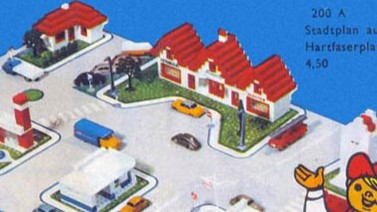
The Opel Kapitan has always been mysterious because it has never appeared in any price lists or catalogues. The very first sign of an Opel appears on two different pictures used on the front of the basic sets released in 1958-59 and on some catalogues. It is a bit hard to see, but in front of the main building is a car that really resembles the Kapitan. Other than that there exists no official LEGO advertisements or information that mentions it. Strange!
As more Opels appeared in recent years, it did not take long for people to see a red line heading towards Norway. In fact 95% of all Opels, if not more, have been found and bought from people in Norway. So there was no doubt that this is where it came from, and now collectors also knew where to look. Not to Denmark, but instead Norway...
Solving the mystery
If you are not familiar with the Norwegian LEGO history, I highly recommend that you read our article on the topic first. It gives you a much better understanding of how the Opel Kapitan came to be.
Arild Ernst Anderson, the guru of Norwegian LEGO, has put an incredible amount of time into researching, collecting and cataloging the Norwegian LEGO history. Thanks to him we have got some amazing insight into how the Norwegian LEGO production operated, how the owners were thinking and how they were working together with LEGO in Denmark. This would only have been possible through his conversations with the Strømberg family (makers of LEGO in Norway), which most of the information we have is based on.
Svein Strømberg, the owner of A/S Norske LEGIO who made LEGO in Norway back in the 1950s, was heavily involved in the development of the LEGO System. Therefore he was also interested in doing something about the lack of cars. So, around 1956/57 the planning of three new cars for the System was started in Norway. The first being the Opel Kapitan, the second a Vauxhall Velox and the third a Simca Aronde. In late 1957 the model is finished and in early 1958 they start being shipped out to retailers in packs of 24, and for the low price of 1 NOK per car.
Svein worked closely with LEGO in Denmark, so it is of course likely that some Opels crossed the border and even were planned to be released elsewhere. After all it did sneak its way into some pictures/advertisements as mentioned earlier, which is almost proof of this being the case.
A recent discovery
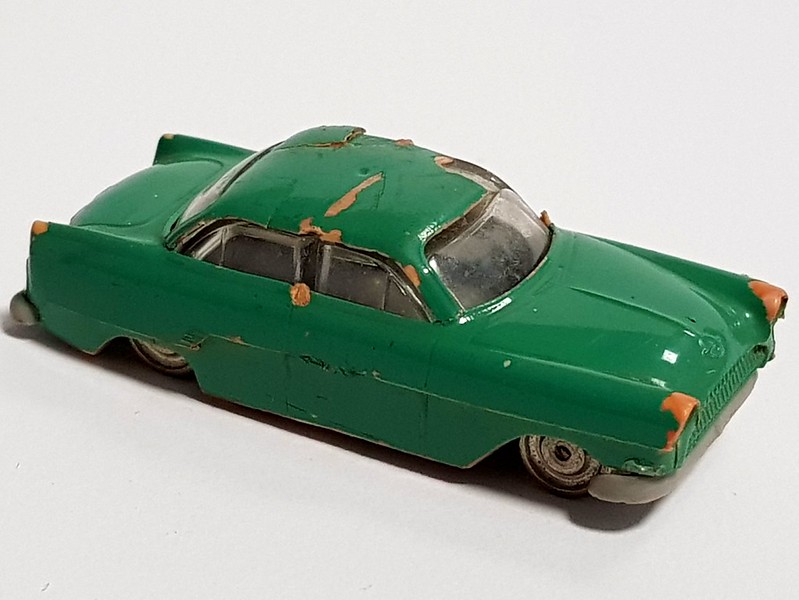
Thanks to an order form which showed up a couple years ago we know that the product number for the Opel Kapitan was 262. Coincidentally, or not, later reused in 1961 for the Opel Rekord. It is also thanks to this order form we know that the Opel Kapitan actually made it out to stores and customers. It was long thought that the Opel never made it to official production, and the ones made were just handed to workers, families and local children. There is some truth in it though, as the Opel was not greatly recieved by the public, and ends up being recalled shortly after in 1958. This is due to the car design being way too fragile, not withstanding the hard play from children. The window frames break, the glass loosens from its place and the wheels break off from the chassis. The failure of the Opel Kapitan unfortunately causes the two other car ideas to also be scrapped, and the remaining Opels are given away.
Due to the short production run and fragile nature of the car it has become an incredibly difficult model to find, especially in good condition. So it is always a big happening in the collector communities when a new one shows up. Today it is expected to be around 50 known in various colours and conditions. A rough estimate would be upwards of 100 still existing, some completely crushed in the bottom of a toy box, and some sitting silently on a shelf somewhere under a layer of dust. Let us hope more show up so that they can be cared for and enjoyed by a bigger part of the community.
Thanks for reading this article, and there is plenty more where it came from. So have a look around our website if you found it interesting.
For the hardcore collectors out there we will now be taking a deepdive into colour variations and technical details of the Opel Kapitan. So keep reading!
Plastic and colour variation
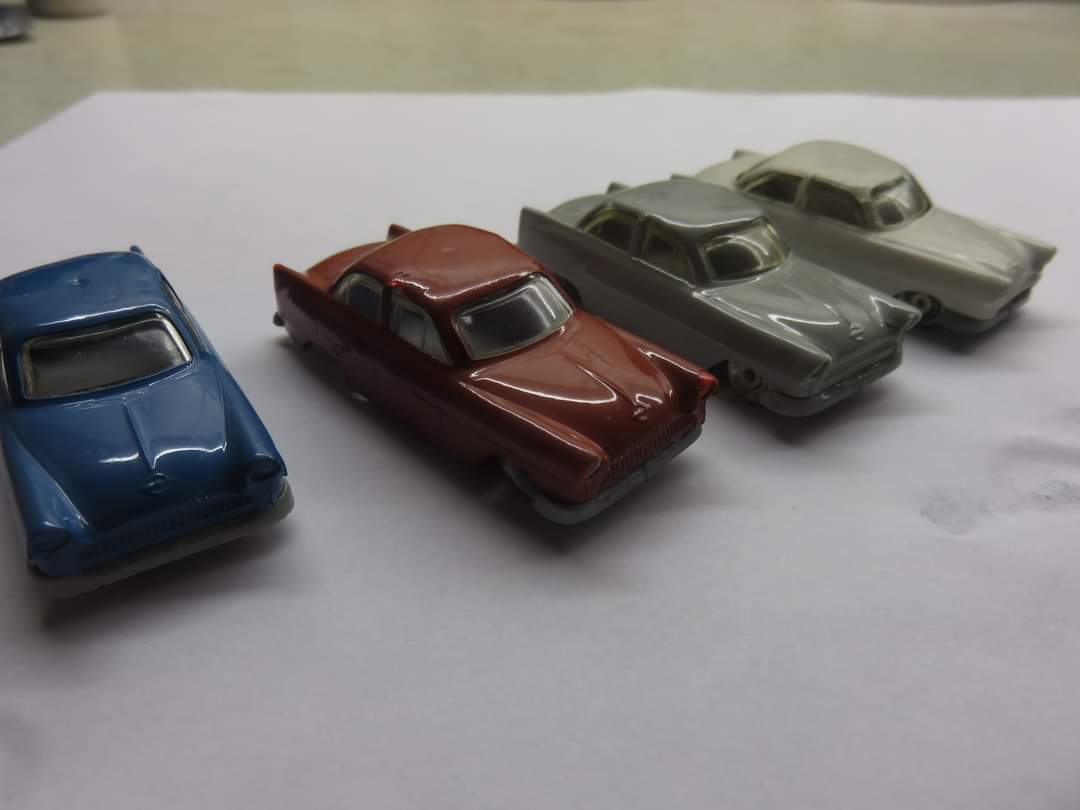
Most of the Opel Kapitans have a layer of paint usually somewhat matching the colour of the plastic underneath. However, quite a few also appear to have been painted with little thought of what may show through as the paint starts to wear off. There are two main plastic variations for the body of the Opel. Solid and marbled. The marbled variant likely used leftover plastic to save on costs, as it was going to be painted over anyways. Some of the Opels made with a solid plastic colour like red or white, have been found without any paint on them at all. This would have saved time painting, but also did not give them the same glossy and clean looking finish as the others.
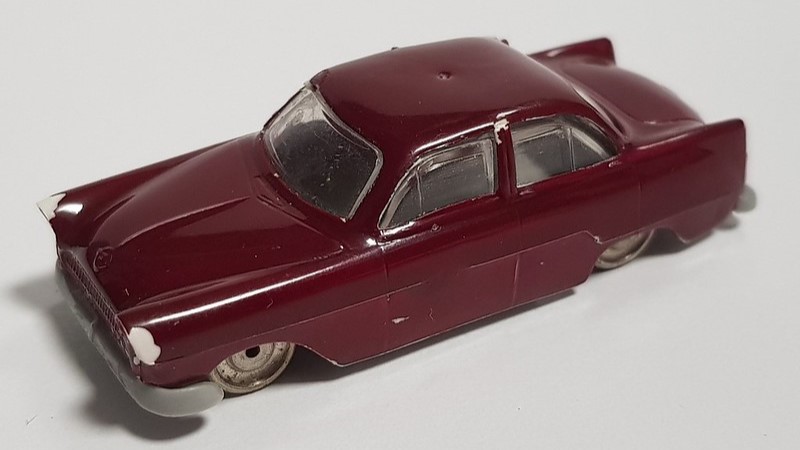
The following paint colours have been found used for the Opel Kapitan. Dark red, red, maroon (brown-red), orange, yellow, green, blue, black, gray and white
Other details
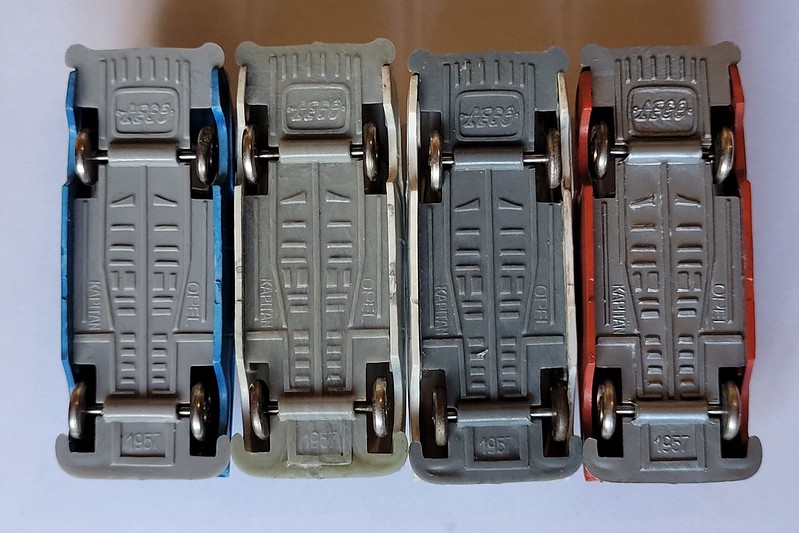
The chassis of the Opel is marked LEGO, Opel Kapitan and 1957. It is marked 1957 not because it was made in 1957, but because it is based on the 1957 model of an Opel Kapitan. On the opposite side of the chassis is a number which ranges from 1 to 6. This number is what position the chassis had in the plastic mould. Meaning during production 6 parts for the Opels were made at once. The glass inside the car is also marked Opel Kapitan and with the same numbering. The body of the car is only marked 1957 on the inside, and of course the same numbering, but no mention of Opel Kapitan.
The Opel chassis has been found in four variations. Gray, a milky slightly marbled gray, dark gray and dark silver. So just for fun, if you wanted all 10 colours of the Opel Kapitans with the four different chassis, you have 40 different Opels to collect. That is roughly as many Opels known so far in any colour... :)
A box for a set of 24 Opels has never been seen. We can of course dream that one is still out there, but it seems unlikely. For all we know it could have just been a simple brown box used to ship them.
If you have information to add or found a mistake then please let us know. It is greatly appreciated. Thanks again for reading!
Last edited 01.06.2026